


Choosing the best hair oil for your hair type can make your hair-care routine much easier. With so many hair oils available in Pakistan, it can be difficult to know which one is right for dry hair, oily scalp, damaged hair, or hair that needs extra nourishment.
The best hair oil is not necessarily the most popular one. Your hair texture, scalp condition, dryness, breakage, and personal hair-care goals should all be considered before choosing an oil.
In this guide, we will explain how to choose the best hair oil for your hair type, what to look for in a hair oil, how different hair concerns can affect your choice, and how to build a simple hair-oiling routine.
How to Choose the Best Hair Oil for Your Hair Type
The first step in choosing a hair oil is understanding what your hair actually needs.
For example, dry and rough hair may benefit from a nourishing and moisture-focused oil, while someone with an oily scalp may prefer using a lighter amount and a less frequent oiling routine.
Before buying a hair oil, consider these factors:
- Your scalp type
- Hair texture
- Dryness level
- Hair breakage
- Hair damage
- Scalp comfort
- Your main hair-care goal
- How often you normally wash your hair
Instead of choosing an oil simply because it is trending, choose one that fits your routine and your hair’s needs.
Best Hair Oil for Dry Hair
Dry hair often feels rough, dull, brittle, or difficult to manage.
If your hair tends to feel dry, a nourishing oil can be a useful part of your routine. Hair oil can help condition the hair and improve the way dry-looking hair feels.
When choosing an oil for dry hair, look for a formula positioned around:
- Moisture
- Nourishment
- Softness
- Smoothness
- Hair repair
- Conditioning
You do not need to apply a large amount of oil. A moderate amount applied to the scalp and dry hair lengths may be enough.
If your main concern is dry or brittle-looking hair, you may also want to focus on gentle washing, regular conditioning, and reducing excessive heat styling.
Best Hair Oil for Oily Scalp
An oily scalp requires a different approach.
If your scalp becomes greasy quickly, applying large amounts of oil may make your hair feel heavy and difficult to wash.
You can still include oiling in your routine, but consider:
- Using a smaller amount
- Avoiding excessive scalp oiling
- Keeping your oiling routine moderate
- Washing the hair properly afterward
- Paying attention to how your scalp responds
Your goal should be a clean and comfortable scalp rather than covering it with a large amount of oil.
If you regularly experience scalp irritation, excessive flaking, or other persistent scalp problems, consider speaking with a qualified healthcare professional.
Best Hair Oil for Damaged Hair
Hair can become damaged because of frequent heat styling, chemical treatments, rough brushing, environmental exposure, or repeated mechanical stress.
Damaged-looking hair may feel dry, rough, weak, or difficult to manage.
When choosing a hair oil for damaged hair, look for a product positioned around:
- Deep nourishment
- Moisture
- Conditioning
- Softness
- Repair-focused hair care
- Improved manageability
Hair oil cannot reverse every type of structural hair damage, but it can be part of a broader routine focused on keeping hair conditioned and reducing unnecessary dryness.
Try combining oiling with gentle shampooing, conditioning, careful brushing, and reduced heat exposure.
Best Hair Oil for Hair Fall and Breakage
Hair fall and hair breakage are not exactly the same thing.
Hair fall refers to hair shedding from the scalp, while breakage happens when the hair shaft breaks.
This difference is important when choosing a hair-care product.
If your main concern is breakage, a nourishing and conditioning routine may help your hair feel stronger and easier to manage.
If you are experiencing significant or persistent hair loss, however, choosing a hair oil alone may not address the underlying cause.
Hair loss can have many possible causes, including genetics, stress, nutritional factors, hormonal changes, scalp conditions, and other health-related factors.
For persistent or unusual hair loss, it is better to seek professional medical advice.
Best Hair Oil for Normal Hair
If your hair is generally healthy, manageable, and neither extremely dry nor excessively oily, you have more flexibility when choosing a hair oil.
A simple routine may be enough.
You can choose an oil based on your preferred ingredients, texture, scent, and the type of nourishment you want from your routine.
The most important thing is consistency.
You do not need to use multiple oils at the same time. Choose one suitable product and see how your hair responds.
What Ingredients Should You Look for in Hair Oil?
Different hair oils contain different ingredients, so reading the product information can help you make a better choice.
Depending on your hair-care goal, you may come across ingredients such as:
Amla
Amla is commonly used in traditional hair-care routines and is often included in products designed around nourishment and conditioning.
Garlic
Garlic-based hair oils are commonly marketed around scalp care and hair-fall concerns.
Ginseng
Ginseng is another ingredient used in hair-care formulations positioned around nourishment and strengthening.
Onion
Onion-based hair oils are popular among people looking for products focused on scalp and hair-fall care.
Almond
Almond-based hair oils are often associated with nourishment, moisture, softness, and shine.
The ingredient alone should not be the only factor in your decision. Always consider the complete product formulation and its instructions.
Wellice Hair Oils for Different Hair-Care Needs
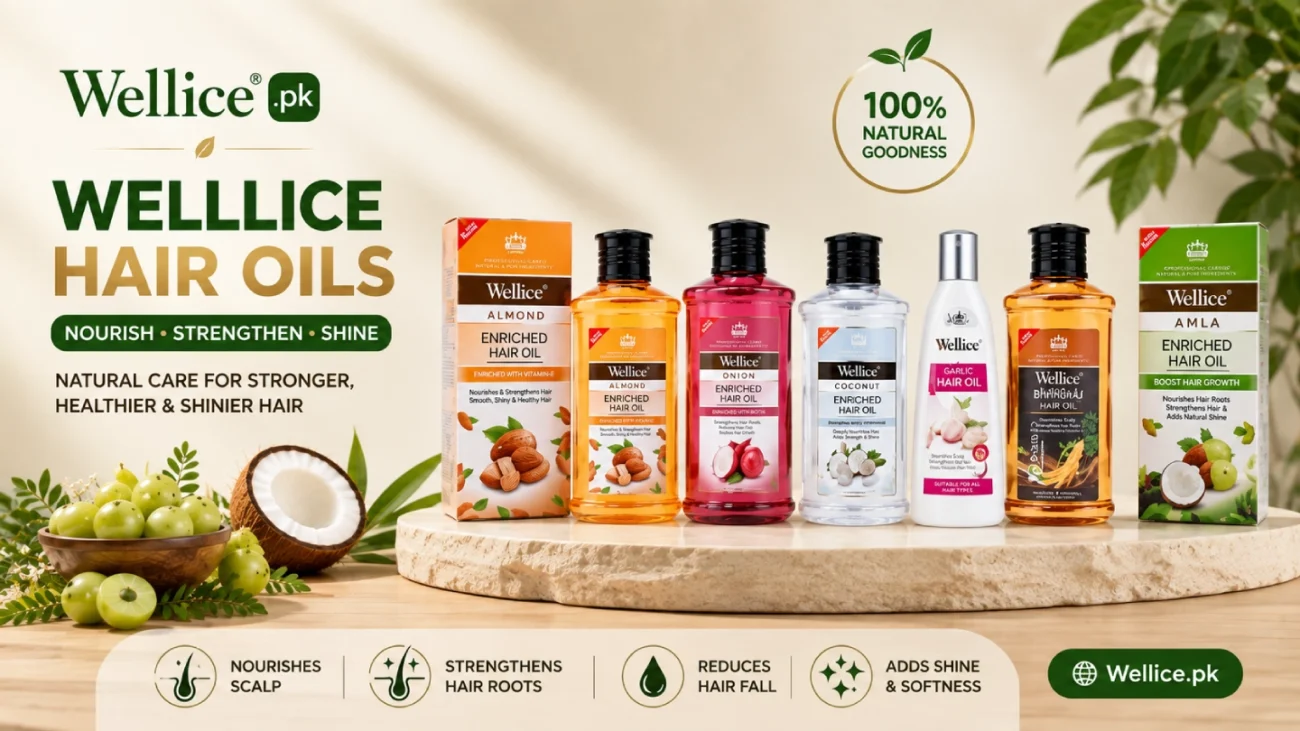
If you are looking for a hair oil in Pakistan, Wellice offers a range of hair oils designed around different hair-care needs.
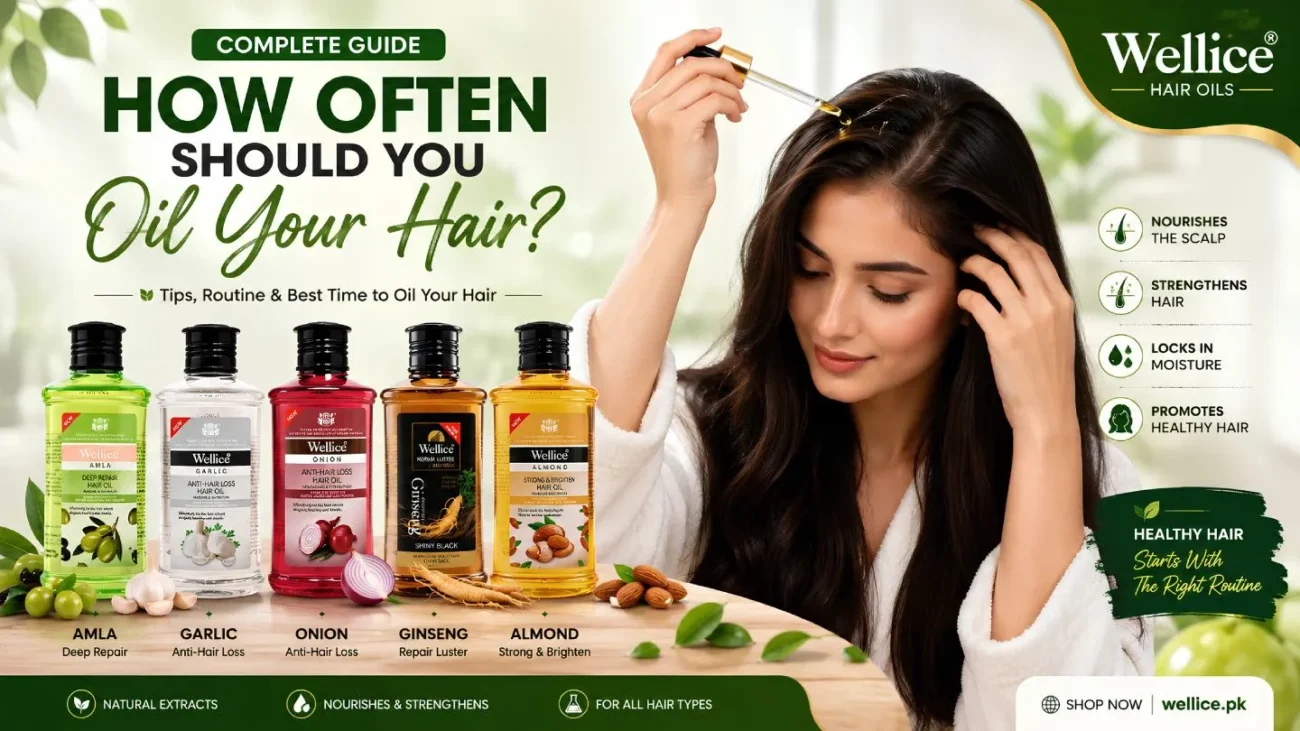
The Wellice Hair Oils collection includes options featuring ingredients such as Amla, Garlic, Ginseng, Onion, and Almond.
You can explore the Wellice Hair Oils collection to compare the available options and choose one that fits your hair-care routine.
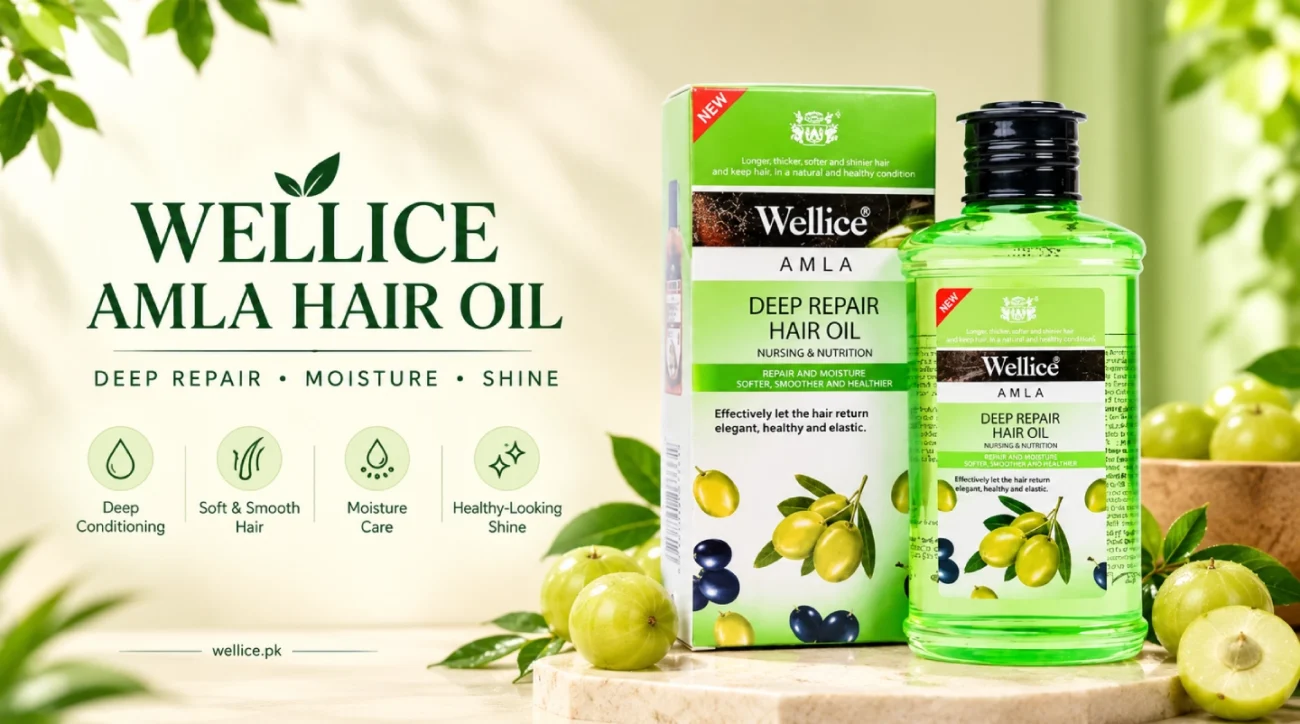
Wellice Amla Hair Oil
Wellice Amla Hair Oil is positioned around deep repair and moisture.
It can be considered by people whose main hair-care goal is nourishment and moisture for dry or rough-looking hair.
If your hair feels dry and lacks softness, a moisture-focused hair oil may fit naturally into your routine.
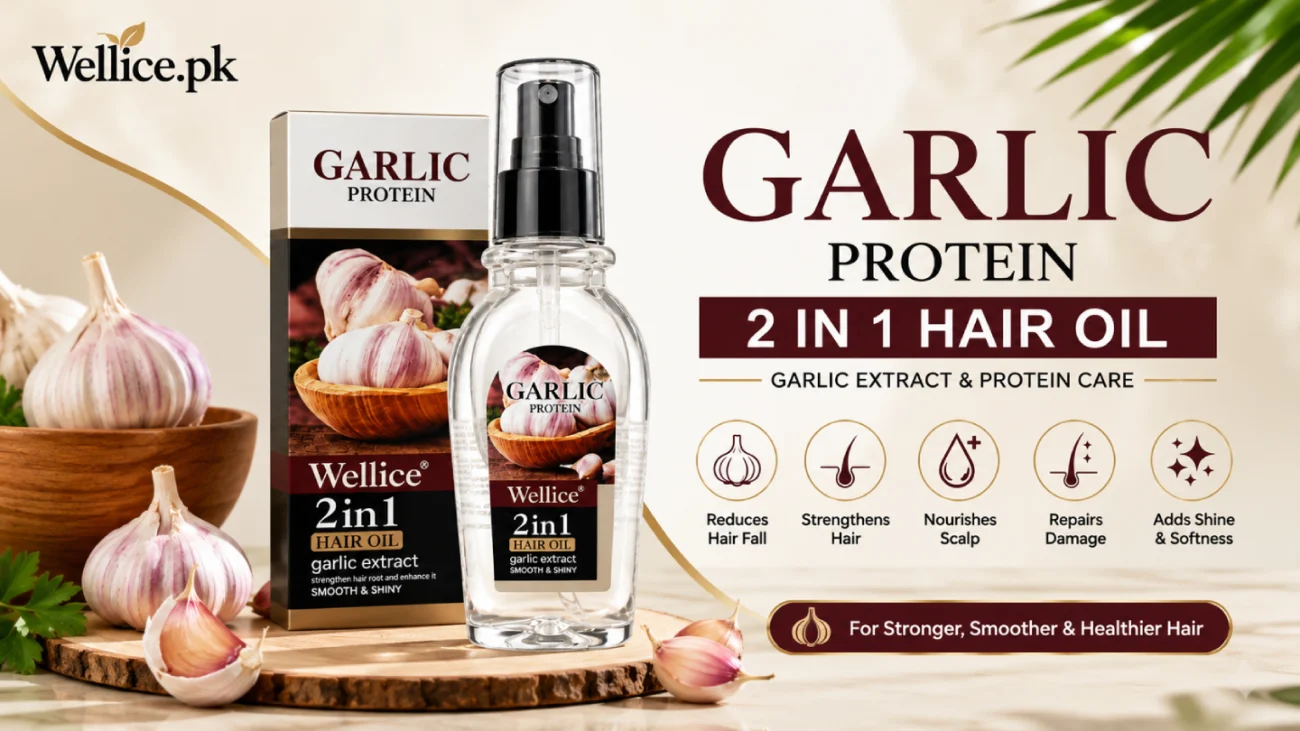
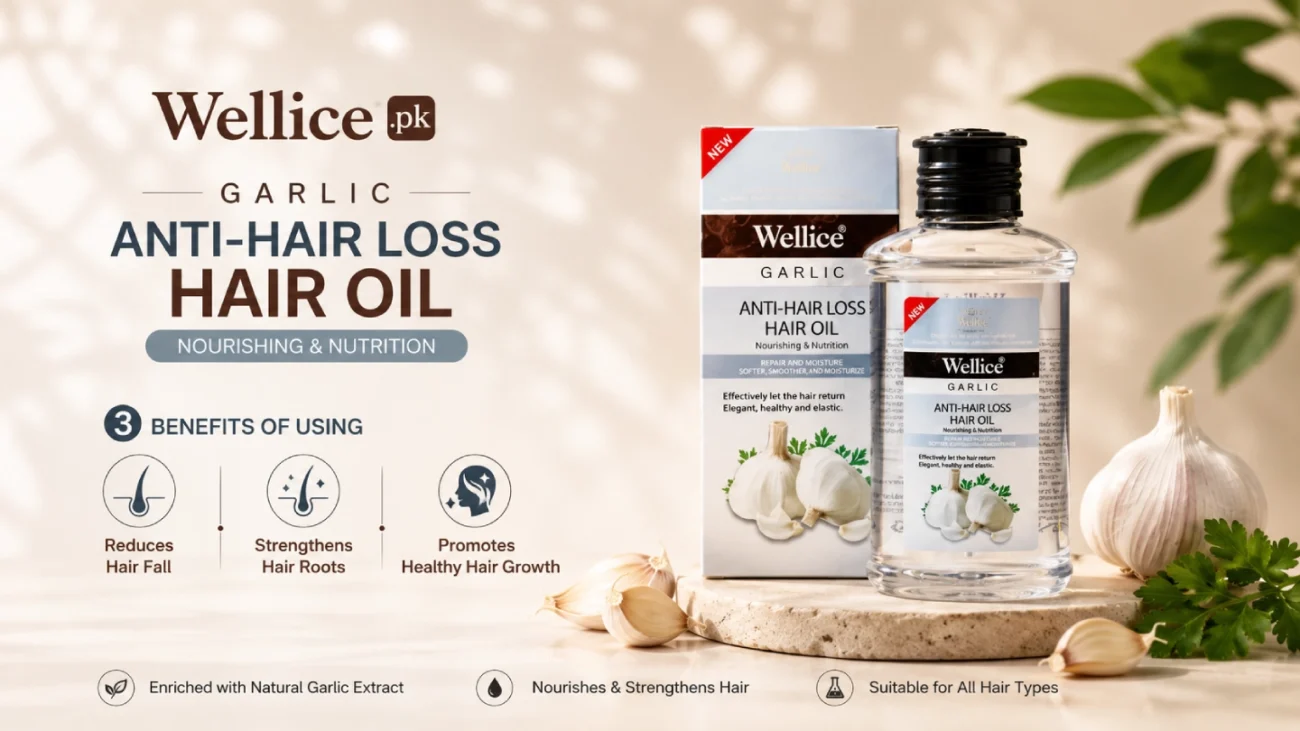
Wellice Garlic Anti-Hair Loss Hair Oil
Wellice Garlic Anti-Hair Loss Hair Oil is formulated with garlic extract and positioned around scalp nourishment and hair-fall concerns.
If your main interest is an oil specifically marketed for hair-fall-related care, this type of formula may be worth considering.
However, persistent hair loss should not be treated as a simple cosmetic issue. If shedding is unusual or continues for a long time, consider professional advice.
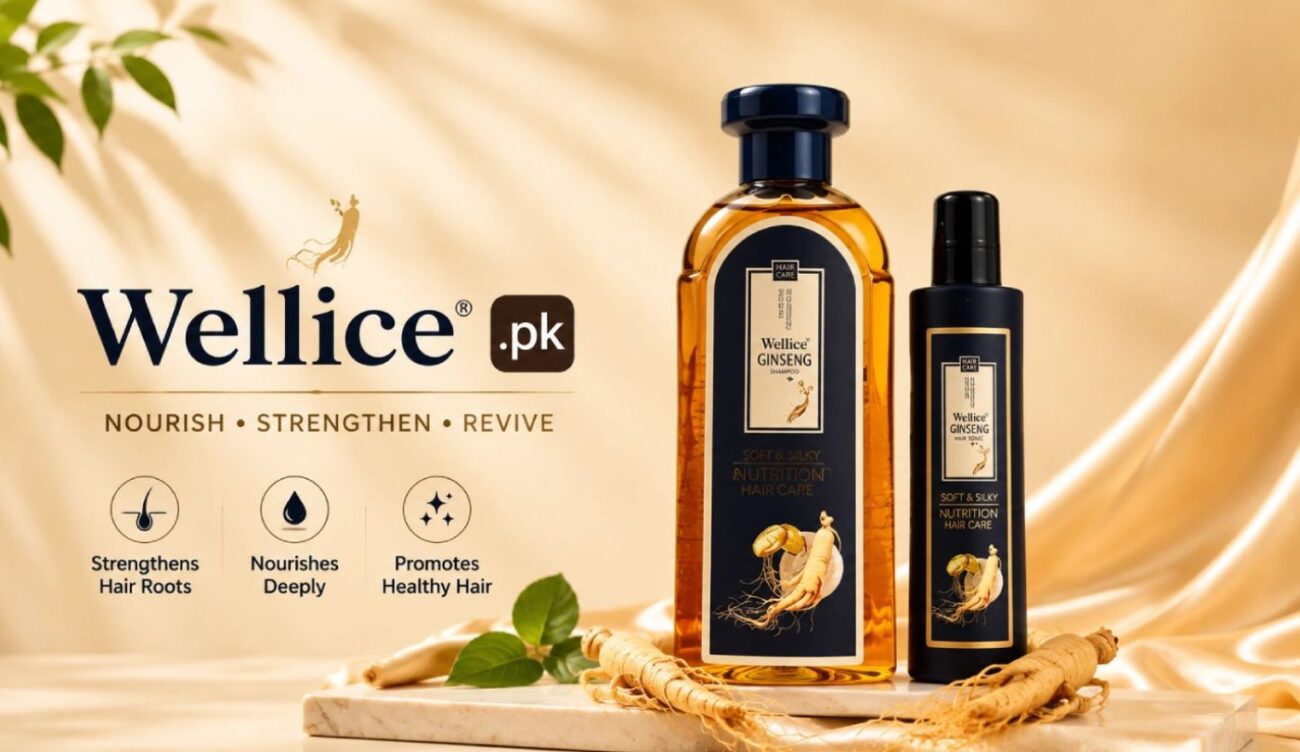
Wellice Ginseng Hair Oil
Wellice Ginseng Hair Oil contains ginseng essence and is positioned around nourishing and strengthening hair.
It may be suitable for people who want a strengthening-focused hair-care routine.
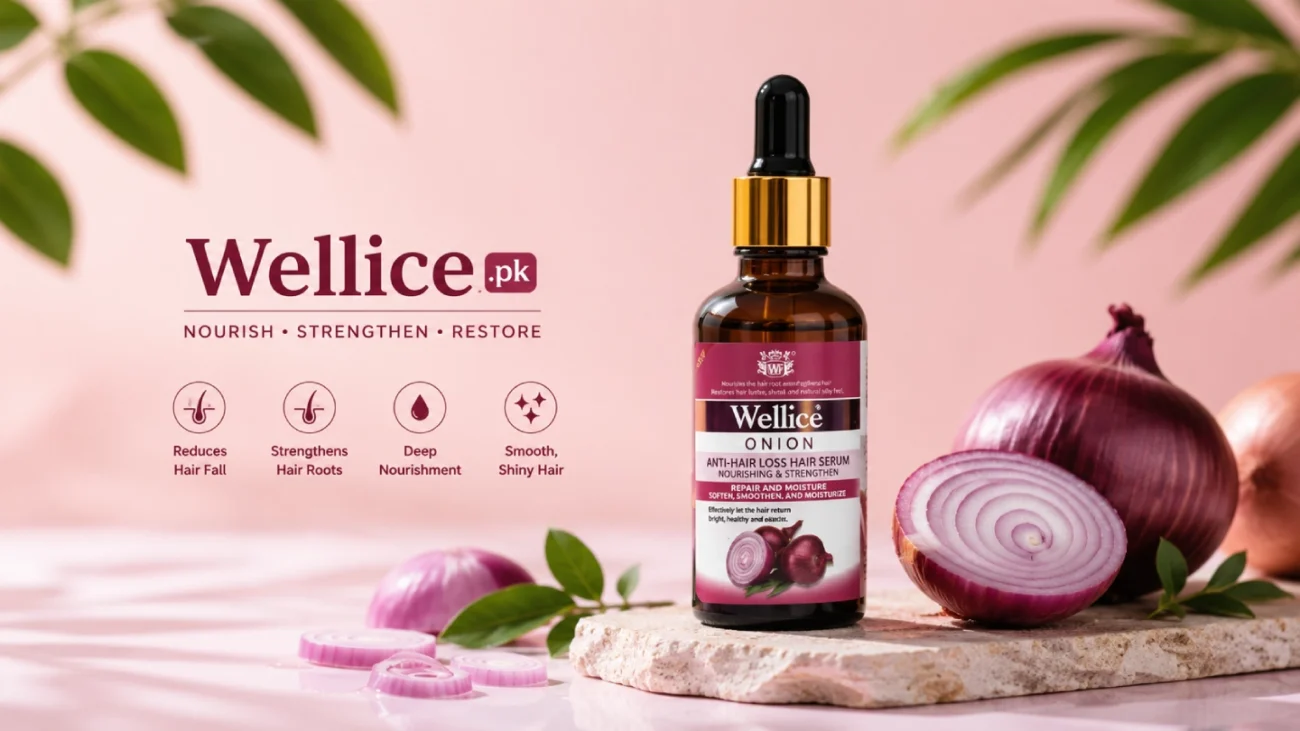
Wellice Onion Hair Oil
Wellice Onion Hair Oil is another option for people interested in onion-based hair care.
Onion is a popular ingredient in products marketed around scalp nourishment and hair-fall concerns.
Wellice Almond Hair Oil
Wellice Almond Hair Oil is positioned around deep repair, moisture, nourishment, softness, and shine.
It may be particularly relevant for people whose hair feels dry, brittle, or rough.
The best choice ultimately depends on your individual hair-care needs.
How to Match Hair Oil to Your Hair Type
A simple way to choose an oil is to start with your main concern.
If Your Hair Is Dry
Look for an oil focused on:
- Moisture
- Nourishment
- Softness
- Conditioning
If Your Hair Is Oily
Focus on:
- Moderate application
- Less frequent oiling
- Avoiding excessive product
- Proper cleansing
If Your Hair Looks Damaged
Look for:
- Nourishing formulas
- Moisture
- Conditioning
- Repair-focused care
Also reduce excessive heat and rough handling.
If You Are Concerned About Breakage
Choose a nourishing routine and focus on gentle hair handling.
Avoid aggressive brushing and excessive heat styling.
If You Want Scalp-Focused Care
Look for products specifically positioned around scalp nourishment and apply them according to their instructions.
How Much Hair Oil Should You Use?
Using more oil does not automatically mean better results.
A common mistake is completely soaking the hair in oil.
Instead, start with a small amount and add more only if necessary.
For scalp application, gently massage the oil using your fingertips.
For dry hair lengths, apply a small amount to the mid-lengths and ends.
The amount you need will depend on:
- Hair length
- Hair thickness
- Hair texture
- Scalp type
- Product formulation
The goal is to distribute the oil effectively rather than use as much as possible.
How to Apply Hair Oil Properly
A simple application routine can help you avoid using too much product.
Step 1: Start With a Small Amount
Pour a small amount into your palm.
Warm it gently between your hands if the product instructions allow.
Step 2: Apply to the Scalp
If the oil is designed for scalp application, gently massage it into the scalp using your fingertips.
Avoid scratching with your nails.
Step 3: Apply to Hair Lengths
If your hair lengths are dry, apply a small amount to the mid-lengths and ends.
There is no need to completely saturate the hair.
Step 4: Leave It for the Recommended Time
Follow the instructions provided with your particular hair oil.
Many hair-oiling routines use a short pre-wash application rather than leaving oil on indefinitely.
Step 5: Wash Your Hair
After the recommended application time, wash your hair with a suitable shampoo.
If your hair lengths feel dry, follow with conditioner.
How Often Should You Oil Your Hair?
The ideal frequency depends on your hair and scalp.
For many people, once or twice a week is a practical starting point. Dry hair may benefit from a consistent routine, while an oily scalp may require less frequent oiling. Your Day 1 guide covers this topic in more detail.
A simple routine could be:
Dry hair: 1–2 times per week
Normal hair: About once a week
Oily scalp: Once a week or less, depending on your scalp
The most important thing is to pay attention to how your hair and scalp respond.
Common Hair-Oiling Mistakes to Avoid
Even a good hair oil may not feel helpful if you use it incorrectly.
Using Too Much Oil
Heavy application can make your hair greasy and harder to wash.
Oiling Too Frequently
Daily heavy oiling is not necessary for everyone.
Scratching the Scalp
Always massage gently with your fingertips.
Rubbing Hair Aggressively
Rough handling can increase breakage.
Leaving Oil on for Too Long
Longer application is not automatically better.
Follow the product instructions and wash the oil when appropriate.
Ignoring Your Hair Type
A routine designed for dry hair may not suit an oily scalp.
Always adjust your routine according to your individual needs.
Hair Oil vs Hair Serum: What’s the Difference?
Hair oil and hair serum are not necessarily used for exactly the same purpose.
Hair oils are commonly used as part of pre-wash or nourishing routines, while hair serums are often applied to the hair lengths for smoothness, manageability, shine, or styling support.
Your choice depends on your goal.
If your main concern is pre-wash nourishment, hair oil may fit your routine better.
If your main concern is managing frizz or improving the appearance of the hair lengths, a serum may be more suitable.
Some people may use both as part of a broader routine, but you do not need multiple products to maintain basic hair care.
A Simple Weekly Hair-Oiling Routine
If you are new to hair oiling, keep your routine simple.
Once or Twice a Week
Step 1: Choose a hair oil suited to your hair type.
Step 2: Apply a moderate amount.
Step 3: Massage the scalp gently if the product is suitable for scalp application.
Step 4: Apply a small amount to dry hair lengths if needed.
Step 5: Leave the oil for the recommended time.
Step 6: Wash thoroughly.
Step 7: Condition the hair lengths if required.
After following the routine consistently, observe how your hair feels.
If your hair becomes greasy or heavy, reduce the amount or frequency.
If your hair remains dry, review your overall routine and consider whether additional conditioning is needed.
How to Choose the Best Hair Oil in Pakistan
When shopping for hair oil in Pakistan, price should not be the only deciding factor.
Before purchasing, check:
- Product name
- Ingredients
- Quantity
- Intended use
- Hair-care benefits
- Usage instructions
- Seller
- Packaging
- Current price
It is also important to avoid choosing a product solely because a particular ingredient is popular.
A complete formula and your own hair-care needs matter more than one ingredient.
Is the Most Expensive Hair Oil Always the Best?
No.
A higher price does not automatically mean an oil is better for your hair.
The right product is one that fits your hair type, your routine, and your personal needs.
For example, someone with very dry hair may prioritize moisture and conditioning, while someone with an oily scalp may prioritize a lighter and less frequent routine.
Instead of asking only, “Which hair oil is the most expensive?” ask:
“Which hair oil fits my hair-care needs?”
That approach can help you make a more practical decision.
Conclusion
Choosing the best hair oil for your hair type starts with understanding your hair and scalp.
Dry hair may benefit from a nourishing, moisture-focused routine, while oily scalps may require smaller amounts and less frequent oiling. Damaged-looking hair can benefit from conditioning and gentle handling, while people concerned about hair fall should remember that persistent shedding can have many different causes.
Wellice offers hair oils featuring ingredients such as Amla, Garlic, Ginseng, Onion, and Almond, allowing you to choose an option based on your preferred hair-care focus.
The most important thing is not to use excessive amounts or constantly change products. Choose a suitable oil, follow its instructions, apply it gently, and maintain a consistent routine.
For many people, once or twice a week is a practical starting point, but your own hair and scalp should guide the final routine. For more details about oiling frequency, see our guide on how often you should oil your hair.
Frequently Asked Questions
Which hair oil is best for dry hair?
A nourishing, moisture-focused hair oil may be a good choice for dry or rough-looking hair. Look for a formula positioned around moisture, conditioning, softness, and nourishment.
Which hair oil is best for an oily scalp?
People with oily scalps may prefer using a smaller amount of oil and oiling less frequently. The goal is to avoid making the scalp excessively greasy.
Which hair oil is best for damaged hair?
A nourishing and conditioning hair oil can be included in a routine for dry or damaged-looking hair. Gentle washing, conditioning, and reducing excessive heat are also important.
Which Wellice hair oil should I choose?
The best Wellice hair oil depends on your main hair-care need. The Wellice range includes Amla, Garlic, Ginseng, Onion, and Almond hair oils, each positioned around different hair-care focuses.
How often should I oil my hair?
For many people, once or twice a week is a practical starting point. Dry hair may need more regular conditioning, while oily scalps may need less frequent oiling.
How much hair oil should I use?
Start with a small amount and add more only if necessary. You do not need to completely soak your hair in oil.
Should I oil my hair before shampoo?
Many people prefer applying hair oil before shampooing. This can be a simple way to incorporate oiling into a regular hair-care routine.
Can I use hair oil on my hair lengths?
Yes, if the product is suitable for hair-length application. Apply a small amount to the mid-lengths and ends, especially if they feel dry.
Is hair oil enough to stop hair fall?
Hair oil alone cannot address every possible cause of hair loss. Persistent or significant hair loss should be evaluated by a qualified healthcare professional.
Can I use more than one hair oil?
You can choose different oils for different routines, but using multiple oils at the same time is not necessary. Start with one suitable product and see how your hair responds.